Government Implements New Passport Rules to Streamline Documentation
The Government of India has introduced a crucial change to the passport application process under the Passports (Amendment) Rules, 2025.
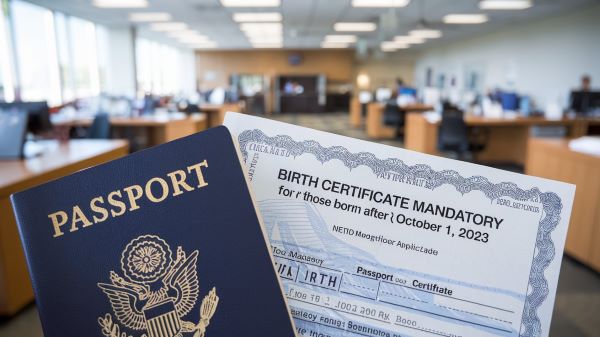
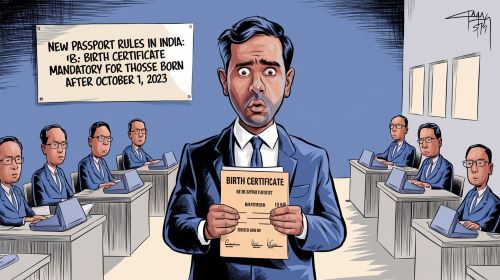
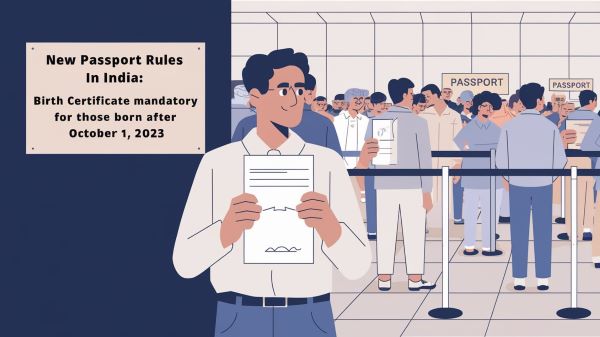
According to the new guidelines, individuals born on or after October 1, 2023, must submit a birth certificate as the sole proof of date of birth while applying for a passport.
This amendment is designed to enhance the authenticity of birth records, eliminate fraudulent documents, and simplify the passport issuance process.
In addition to this significant change, the government has also announced an expansion of Post Office Passport Seva Kendras (POPSKs) from the existing 442 centers to 600 centers in the next five years to improve accessibility.
Who Will Be Affected by the New Passport Rules?
The latest amendment primarily affects individuals born on or after October 1, 2023. For these applicants, a birth certificate issued by an authorized government authority will be the only acceptable document to prove their date of birth.
However, those born before October 1, 2023, will still have the option to submit various other documents as proof of birth, such as:
- Aadhaar Card
- PAN Card
- Driving License
- School Leaving Certificate
- Voter ID
- Any other officially accepted government document
Why Has the Government Made Birth Certificates Mandatory?
The decision to make birth certificates mandatory for newborns aims to standardize the documentation process and prevent inconsistencies in birth records. Some of the key reasons behind this amendment include:
1. Enhancing Birth Record Authenticity
With the Registration of Births and Deaths Act, 1969, in place, the government aims to ensure that every citizen has an authentic birth certificate, reducing cases of fake documents and identity fraud.
2. Simplifying the Passport Application Process
Many applicants face challenges when submitting multiple documents as proof of birth. A single, mandatory birth certificate will reduce discrepancies, making the passport issuance process more transparent and efficient.
3. Strengthening National Security
By having a uniform birth registration process, the government can maintain a more accurate database of citizens, thereby minimizing risks related to forgery, fraud, and illegal immigration.
4. Encouraging Birth Registration Compliance
Many parents in India do not register their child’s birth immediately. With this new rule, parents will be compelled to obtain birth certificates for their newborns, improving compliance with birth registration laws.
How to Obtain a Birth Certificate for Passport Application?
For those born on or after October 1, 2023, obtaining a birth certificate is now a mandatory step before applying for a passport. Here’s how parents can get a birth certificate:
Step 1: Register the Birth
- Births must be registered with the Registrar of Births and Deaths, the Municipal Corporation, or any authorized local authority under the Registration of Births and Deaths Act, 1969.
- The hospital where the baby is born usually provides the necessary documents for registration.
Step 2: Apply for a Birth Certificate
- Parents must apply for the birth certificate at the local municipal office.
- Required documents include:
- Hospital birth record
- Parents’ Aadhaar cards
- Address proof
Step 3: Verification & Issuance
- After verification, the birth certificate is issued within a few days to weeks, depending on the location and government processing speed.
What About Those Born Before October 1, 2023?
Individuals born before October 1, 2023, have the flexibility to use alternative documents as proof of birth. The following documents are still valid for passport application:
- Aadhaar Card – A widely accepted document for identity verification.
- PAN Card – Can serve as an official proof of date of birth.
- Driving License – Also an acceptable alternative.
- Voter ID Card – Official document for identity and birth verification.
- School Leaving Certificate – Many applicants use this document for age proof.
Expansion of Passport Seva Kendras (POPSKs): A Major Boost for Applicants
Alongside these new amendments, the government has announced a major expansion in passport application services. The number of Post Office Passport Seva Kendras (POPSKs) will be increased from 442 to 600 over the next five years.
This expansion aims to:
- Reduce the waiting time for passport applications
- Improve accessibility for people in rural and remote areas
- Enhance passport service efficiency across the country
What This Means for Passport Applicants
With the introduction of these new passport rules, individuals and parents of newborns should be aware of the following changes:
- For Newborns (Born After October 1, 2023)
- Birth certificate is compulsory for passport application.
- Parents must ensure timely registration of births and obtain a certificate from authorized sources.
- For Those Born Before October 1, 2023
- For All Passport Applicants
- More POPSKs will mean faster application processing and easier accessibility.
- It is advisable to keep all documents updated to avoid delays.
Conclusion: A Step Towards a More Streamlined Passport Application Process
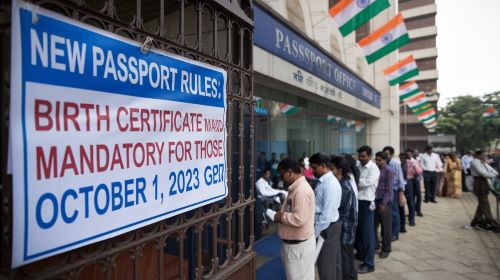
The Government of India’s decision to mandate birth certificates for newborns is a significant step toward standardizing the passport application process.
By making the proof of birth uniform, the government aims to ensure better record-keeping, prevent fraudulent documentation, and enhance the efficiency of passport issuance.
With the expansion of Post Office Passport Seva Kendras (POPSKs), accessibility to passport services will also improve, benefiting millions of applicants across India.
For parents, it is now essential to register their child’s birth without delay and obtain a birth certificate for future documentation needs.
Those born before October 1, 2023, can continue using alternative documents for their passport applications.
By implementing these new passport rules, India is taking a proactive step towards digital documentation, better governance, and national security.