
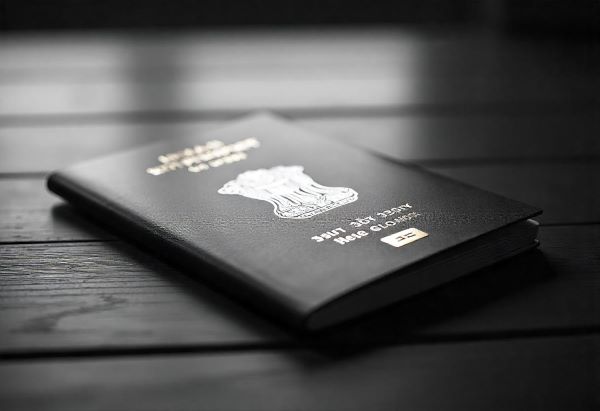
Introduction: India’s Leap Towards Digital Travel Documents
The Indian government has officially begun the rollout of smart chip-enabled e-Passports, revolutionizing the way Indian citizens travel internationally.
As part of the Passport Seva Program (PSP) 2.0, this initiative aims to streamline the passport verification process, enhance security features, and reduce immigration wait times through automated identity checks.
The pilot launch of e-Passports began on April 1, 2024, with select Passport Seva Kendras (PSKs) already equipped to issue these modern travel documents.
With more than 20,000 e-Passports already issued in Tamil Nadu alone, this marks a significant milestone in India’s digital transformation in public services.
What is an e-Passport?

An e-Passport is a biometric passport embedded with an electronic microprocessor chip that stores essential information about the passport holder. This includes:
- Personal details (name, date of birth, etc.)
- Biometric data (photograph, fingerprints, and iris scan)
- A unique identification number
- Digital signature of the issuing authority
The data stored in the chip is in compliance with the standards of the International Civil Aviation Organization (ICAO), ensuring global recognition and interoperability.
Key Features of the Indian e-Passport
The e-Passport includes several advanced features that differentiate it from the traditional printed passport. These include:
🔹 Embedded Microchip
- Stores biometric and demographic data securely
- Cannot be tampered with easily
- Enables faster identity verification at immigration
🔹 Enhanced Security Measures
- Prevents passport duplication and identity theft
- Includes advanced encryption techniques
- Tamper-proof design with polycarbonate data pages
🔹 Global Compatibility
- Fully compatible with ICAO standards
- Accepted by biometric e-gates across major international airports
- Facilitates smooth entry and exit at borders
Benefits of e-Passport for Indian Citizens
The introduction of e-Passports in India offers a host of benefits for frequent travelers and the government alike:
✅ Faster Immigration Clearance
- Automated e-gates speed up immigration processes
- Reduces wait times at international airports
✅ Improved Security

- Reduces risk of data fraud and forgery
- Enhances identity verification through biometrics
✅ Global Acceptance
- Easier travel to countries with biometric entry systems
- Better reputation and acceptance at foreign immigration counters
✅ Convenient and Durable
- More durable than traditional passports due to polycarbonate pages
- Longer lifespan with reduced chances of wear and tear
Cities Where e-Passports Are Being Issued
The Ministry of External Affairs (MEA) has started issuing e-Passports in the following cities during the pilot phase:
- Nagpur
- Bhubaneswar
- Jammu
- Goa
- Shimla
- Raipur
- Amritsar
- Jaipur
- Chennai
- Hyderabad
- Surat
- Ranchi
Tamil Nadu Update
From March 3, 2025, the Regional Passport Office (RPO) in Chennai began issuing e-Passports. As of March 22, 2025, over 20,700 e-Passports have already been distributed in Tamil Nadu, showing a strong response from applicants.
How to Apply for an e-Passport Online
Applying for an Indian e-Passport is simple and can be done via the official Passport Seva Portal. Here’s a step-by-step guide:
Step 1: Register on the Passport Seva Portal
- Visit https://www.passportindia.gov.in
- Create an account using your email and mobile number
- Select the relevant passport application type (new/renewal)
Step 2: Fill Out the Application Form
- Provide personal details, address, and emergency contacts
- Select the passport office nearest to your location
- Choose the option for an e-Passport, if available
Step 3: Schedule an Appointment
- Choose a date and time for your biometric verification
- Make the payment online (varies based on normal/tatkal services)
Step 4: Visit the Passport Seva Kendra
- Carry original documents (Aadhaar card, birth certificate, old passport, etc.)
- Undergo biometric verification (photograph, fingerprints, iris scan)
Step 5: Track Status and Receive e-Passport
- Use your application reference number to track status online
- Once approved, the e-Passport will be delivered to your registered address
Who is Eligible for an Indian e-Passport?
Any Indian citizen eligible for a passport can apply for an e-Passport. This includes:
- First-time applicants
- Applicants renewing expired passports
- Individuals with valid police clearance and documentation
Please note: e-Passport issuance is currently limited to select cities. The service will expand gradually across all regions.
Future Expansion of the e-Passport Program

The Ministry of External Affairs has confirmed that the e-Passport program will be rolled out across India in a phased manner. The complete implementation under the Passport Seva Program 2.0 is expected to be completed by mid-2026.
Government sources have also revealed plans to integrate facial recognition technology, AI-based threat detection, and contactless immigration in future upgrades.
FAQs on Indian e-Passports
❓ Can I convert my existing passport into an e-Passport?
No, you must apply for a renewal or reissue to get an e-Passport.
❓ Is there a difference in fees?
Currently, the fee structure remains the same as regular passports.
❓ Is e-Passport mandatory?
Not yet. Traditional passports are still valid and in use. e-Passport is optional for now.
Conclusion
The launch of e-Passports in India is a landmark step in simplifying international travel, bolstering security, and embracing digital innovation.
With faster immigration clearance, robust security, and seamless global compatibility, e-Passports are the future of Indian travel documentation.
As the program scales nationwide, Indian citizens can look forward to a smarter, safer, and more efficient passport experience.