
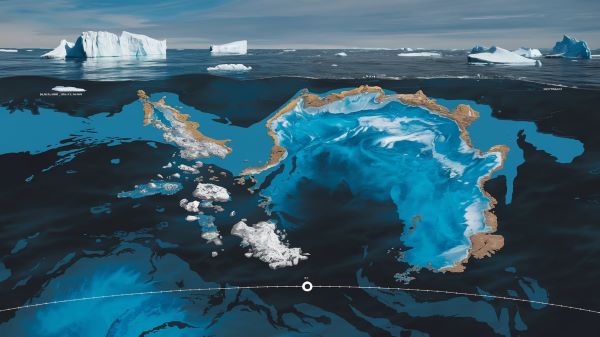
The Antarctic Circumpolar Current (ACC), the strongest ocean current on Earth, is facing an alarming slowdown.
Contrary to expectations that it would accelerate due to climate change, recent research suggests that it may weaken by 20% by 2050. This unexpected development has severe implications for global climate, marine ecosystems, and food security.
What is the Antarctic Circumpolar Current (ACC)?

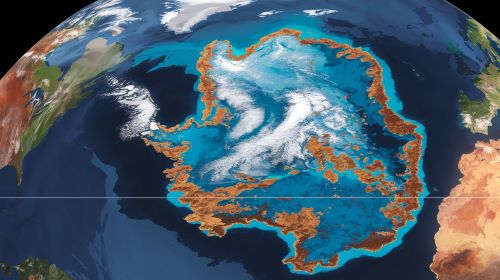
The Antarctic Circumpolar Current flows clockwise around Antarctica and acts as a powerful climate regulator for the planet.
It plays a vital role in maintaining ocean circulation, distributing nutrients, and controlling the Earth’s temperature.
Key Facts About the Antarctic Circumpolar Current
- It is five times stronger than the Gulf Stream.
- It is 100 times more powerful than the Amazon River.
- It connects the Pacific, Atlantic, and Indian Oceans.
- It acts as a moat around Antarctica, keeping warm waters away from the ice sheets.
- It prevents invasive species from reaching Antarctica.
Why is the Antarctic Circumpolar Current Weakening?
Several factors contribute to the slowing of the Antarctic Circumpolar Current. Climate change, melting ice sheets, and fresh water influx are disrupting its natural flow.
1. Climate Change and Warming Waters
Climate change is rapidly increasing ocean temperatures. Warmer waters should theoretically speed up the ACC due to density changes. However, this is not happening.
2. Melting Antarctic Ice and Freshwater Disruption
As Antarctic ice melts, massive amounts of freshwater enter the ocean. This fresh water is less salty and lighter than seawater, which reduces the density differences that drive ocean currents. The result? A slower, weaker current.
3. Impact of Changing Wind Patterns
Wind plays a crucial role in driving ocean currents. Changes in wind patterns due to global warming may also contribute to the weakening of the ACC.
Consequences of a Slower Antarctic Circumpolar Current
The weakening of the Antarctic Circumpolar Current could have far-reaching consequences for Earth’s climate, marine life, and weather patterns.
1. Disruption of the Global Ocean Conveyor Belt
The global ocean conveyor belt, also known as thermohaline circulation, depends on ocean currents to transport heat and nutrients across the planet. If the ACC slows down, this circulation system could weaken, leading to:
- Extreme weather events such as hurricanes, heatwaves, and cold snaps.
- Unstable climate patterns with unpredictable rainfall and droughts.
- Rising sea levels due to slower heat distribution.
2. Threat to Marine Ecosystems
The ACC is responsible for transporting oxygen and nutrients to marine life across the world’s oceans. A slowdown would:
- Reduce oxygen levels in deep waters.
- Disrupt the food chain, impacting fish populations and marine biodiversity.
- Increase ocean acidification, threatening coral reefs.
3. Antarctic Ice Sheet Instability
A weaker ACC could allow warm waters to penetrate closer to Antarctica’s ice shelves, accelerating ice melt and contributing to global sea-level rise.
4. Impact on Global Fisheries and Food Security
Many of the world’s major fisheries rely on the nutrient-rich waters transported by the ACC. A disruption in this system could:
- Reduce fish populations, affecting food supply.
- Harm the global fishing industry.
- Threaten the livelihoods of millions of people.
Can We Prevent the Collapse of the Antarctic Circumpolar Current?
Scientists predict the ACC could slow by 20% by 2050 if current warming trends continue. However, urgent climate action can help prevent this collapse.
1. Reduce Greenhouse Gas Emissions
The primary driver of climate change is human-induced greenhouse gas emissions. Governments and industries must:
- Transition to renewable energy sources.
- Implement stricter carbon emission regulations.
- Promote sustainable transportation and industrial practices.
2. Protect Antarctica’s Ice Sheets
Preserving Antarctica’s ice shelves is crucial to maintaining the ACC. This requires:
- Reducing global warming to slow ice melt.
- Implementing conservation policies to protect Antarctic ecosystems.
- Expanding research and monitoring efforts.
3. Invest in Ocean Conservation

Protecting ocean health is vital for maintaining natural climate regulation systems. Measures include:
- Reducing plastic pollution and overfishing.
- Expanding marine protected areas.
- Investing in ocean-based carbon sequestration.
Final Thoughts
The Antarctic Circumpolar Current is a lifeline for Earth’s climate and ecosystems. Its weakening poses a serious risk to global stability.
The time to act is now. By prioritizing climate action, reducing emissions, and protecting the Antarctic, we can slow down this environmental crisis and secure a more stable future for our planet.