
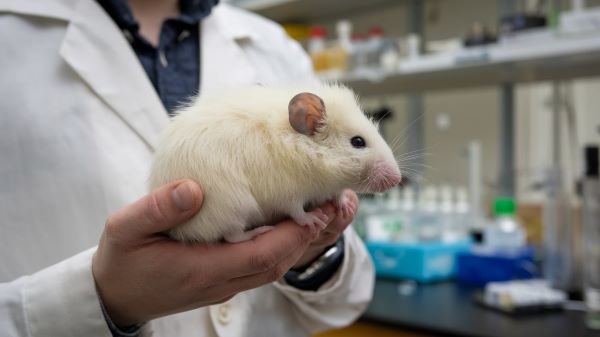
In a groundbreaking scientific achievement, researchers have successfully created genetically engineered “woolly mice” as part of their ambitious efforts to bring back the extinct woolly mammoth.
A US-based bioscience company, Colossal Biosciences, has announced the birth of these mice, which exhibit mammoth-like traits such as thick, wavy, and golden fur designed to tolerate extreme cold.
This development marks a significant milestone in de-extinction science, proving that complex genetic traits can be recreated in modern animals.

Scientists edited seven genes to instill cold-resistant properties in the mice, demonstrating the potential to apply similar techniques to resurrect the woolly mammoth.
Key Highlights of the Breakthrough
- Colossal Biosciences successfully creates “woolly mice” with mammoth-like cold-resistant traits.
- Scientists edited seven genes to mimic the genetic adaptations of the woolly mammoth.
- The research demonstrates the feasibility of reviving extinct species through genetic engineering.
- The study is currently in its preprint stage and has not yet undergone peer review.
The Science Behind ‘Woolly Mice’
Genetic Engineering and Cold Resistance
Colossal Biosciences’ research focused on identifying and modifying genes responsible for cold resistance in woolly mammoths. By integrating these genes into mice, the team successfully engineered mammals with thick, wavy fur similar to that of the mammoth.
According to the company’s co-founder and CEO, Ben Lamm, this success confirms their ability to recreate intricate genetic combinations that took nature millions of years to develop.
“By engineering multiple cold-tolerant traits from mammoth evolutionary pathways into a living model species, we have proven our ability to recreate complex genetic combinations. This success brings us a step closer to our goal of bringing back the woolly mammoth,” said Ben Lamm.
Seven Key Genes Responsible for Cold Adaptation
The research team focused on seven specific genes associated with mammoth cold tolerance. These genes influence:
- Hair growth and texture – Creating thick, woolly fur for insulation.
- Fat storage and metabolism – Enhancing the body’s ability to retain heat.
- Circulatory adaptations – Maintaining body warmth in freezing environments.
How ‘Woolly Mice’ Bring Us Closer to Woolly Mammoths
The successful genetic modification of mice is a proof-of-concept for de-extinction science. If scientists can replicate cold-adaptive traits in mice, they can apply the same techniques to larger mammals, such as elephants, to gradually revive the woolly mammoth.
The Role of Asian Elephants in Mammoth Revival
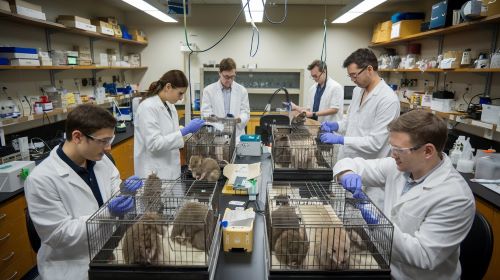
Asian elephants share a close genetic lineage with woolly mammoths, making them ideal candidates for genetic modification. By introducing the same cold-resistant genes into elephant embryos, scientists aim to create elephant-mammoth hybrids capable of thriving in Arctic climates.
Potential Impact of Reviving Woolly Mammoths
Ecological Benefits of De-Extinction
Bringing back woolly mammoths could have significant environmental benefits, particularly in Arctic ecosystems. Scientists believe that reintroducing mammoth-like creatures to the tundra could help:
- Slow permafrost melting – Their movement compacts the snow, reducing heat absorption.
- Promote grassland restoration – Mammoths helped maintain grasslands, which store carbon more effectively than tundra moss.
- Balance the Arctic ecosystem – Restoring lost herbivores could reshape ecosystems and benefit biodiversity.
Ethical and Scientific Challenges
While the prospect of de-extinction is exciting, it raises several ethical and technical concerns:
- Genetic safety – Ensuring that the modified species can survive and reproduce without unintended consequences.
- Environmental balance – Introducing mammoths into today’s ecosystem may have unpredictable effects.
- Conservation priorities – Some argue that resources should focus on protecting existing endangered species rather than reviving extinct ones.
Future of Genetic Engineering and De-Extinction
The success of woolly mice is a promising step towards the revival of extinct species. Colossal Biosciences is now focusing on further refining their genetic techniques to eventually create mammoth-elephant hybrids.
If successful, we could witness the return of woolly mammoths to the Arctic within the next decade.
What’s Next?

- Further genetic testing – Ensuring the modified genes function correctly in larger mammals.
- Creating elephant-mammoth hybrids – Applying the woolly mouse experiment to Asian elephants.
- Environmental trials – Testing how mammoth-like creatures adapt to Arctic conditions.
Conclusion
The creation of ‘woolly mice’ is a major milestone in genetic engineering and de-extinction science. While challenges remain, this breakthrough brings scientists one step closer to resurrecting the woolly mammoth. If successful, this technology could revolutionize conservation efforts and reshape our understanding of life and extinction.
As genetic engineering continues to evolve, the dream of seeing woolly mammoths roam the Earth again may soon become a reality.