Introduction
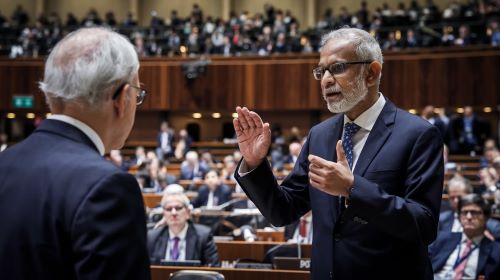
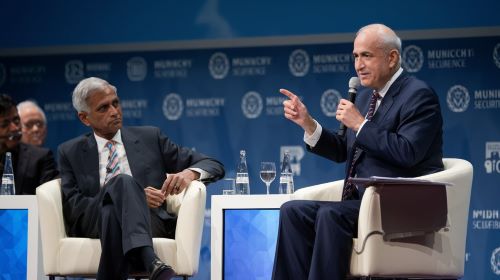
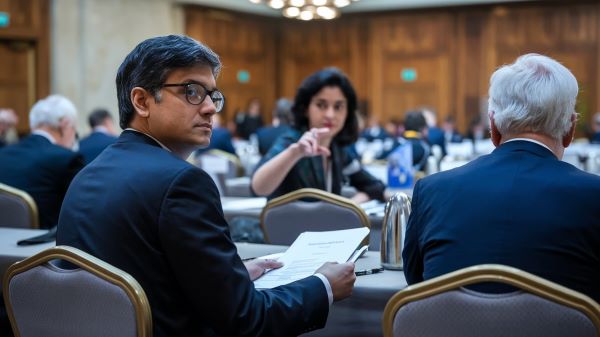
At the Munich Security Conference, India’s External Affairs Minister S Jaishankar strongly countered a claim by a US Senator, who remarked that “democracy does not put food on the table.
“ During a panel discussion on ‘Live to Vote Another Day: Fortifying Democratic Resilience’, Jaishankar emphasized India’s democratic strength and criticized the West for treating democracy as an exclusive Western trait.
S Jaishankar’s Strong Response on Democracy
During the discussion, US Senator Elissa Slotkin and other panelists shared concerns about global democracy. However, Jaishankar firmly disagreed, stating that democracy is not in crisis and remains a robust system, particularly in India.
Key Points from Jaishankar’s Response:
✔ India’s Strong Voter Turnout: He highlighted that Indian elections see nearly two-thirds voter participation, with around 700 million out of 900 million voters exercising their rights.
✔ Efficient Election Process: He pointed out that India counts votes in a single day, ensuring transparency and efficiency.
✔ Democracy Beyond the West: He emphasized that democracy is not just a Western construct but a system that flourishes in India and other nations.
US Senator’s Remark: ‘Democracy Doesn’t Put Food on the Table’
During the panel, US Senator Elissa Slotkin argued that while democracy is valuable, it does not directly address economic hardships faced by citizens. This statement sparked debates over the role of governance in economic well-being.
The Debate Over Democracy and Economy
While Slotkin’s remarks reflected concerns over economic struggles in democratic nations, Jaishankar countered with an Indian perspective, suggesting that democracy and development can coexist.
Jaishankar’s Take on Development and Democracy
✔ India’s Economic Growth Under Democracy: He highlighted India’s economic rise while maintaining a democratic structure.
✔ Empowerment Through Voting: He stressed that elections empower people to choose leaders who can improve governance and economic conditions.
✔ Democracy as an Indian Identity: He reinforced that India has upheld democratic values despite economic and political challenges.
India’s Electoral Strength: A Global Example
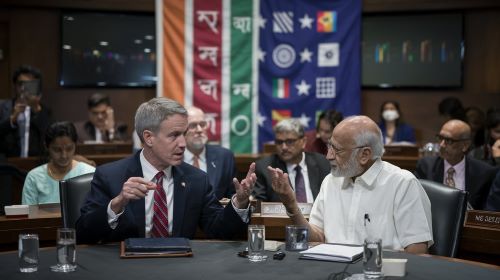
Jaishankar proudly presented India as a model democracy, with massive voter participation and an efficient election system.
How India Ensures Democratic Resilience:
📌 Largest Democracy in the World: India boasts the largest electorate, with 900 million eligible voters.
📌 High Voter Turnout: National elections witness a turnout of nearly 700 million voters.
📌 Technology-Driven Elections: The use of Electronic Voting Machines (EVMs) ensures transparency and efficiency.
📌 Swift Vote Counting: Unlike many Western countries, India counts votes in a single day, ensuring quick and fair results.
Western View vs. Indian Perspective on Democracy
Jaishankar criticized the Western tendency to define democracy from their viewpoint, highlighting that democratic values exist beyond the West.
Western Misconceptions About Democracy in Other Nations
🔹 The West often assumes democracy is unique to Western countries.
🔹 Non-Western democratic models, like India’s, are often overlooked.
🔹 The assumption that only Western democracies are effective is misleading.
Jaishankar’s remarks emphasized the diversity of democratic systems and urged global leaders to recognize democracy in different cultural contexts.
India’s Growth as a Democratic Nation
Despite challenges, India has successfully balanced democracy and economic growth. Jaishankar’s response reaffirmed India’s commitment to democracy, proving that a nation can be both democratic and economically progressive.
Key Factors Behind India’s Democratic Strength:
✅ Diverse Yet United: Despite cultural and linguistic diversity, India maintains political stability.
✅ Regular Elections: India holds free and fair elections at national, state, and local levels.
✅ Economic Development: India has become a global economic powerhouse while retaining its democratic framework.
Global Reactions to Jaishankar’s Statement
Jaishankar’s sharp response gained attention globally, with analysts praising his assertive stance on India’s democracy.
International Reactions:
🔸 Political analysts acknowledged India’s ability to conduct massive elections efficiently.
🔸 Western media debated the role of democracy in economic development.
🔸 Global leaders appreciated India’s model of democratic resilience.
Conclusion: India’s Democracy is Stronger Than Ever
Jaishankar’s powerful rebuttal at the Munich Security Conference highlighted that democracy is not limited to the West and that India stands as a shining example of a successful democratic nation.
His response to US Senator Slotkin’s claim reinforced the idea that democracy and development can go hand in hand, proving that a robust electoral system can contribute to national progress.
India’s democracy is not just about elections—it’s a symbol of people’s power, economic growth, and global leadership.